





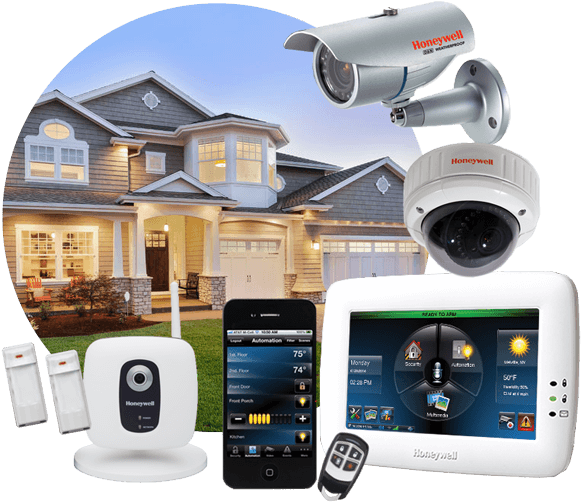
Video surveillance systems can be broadly classified into two categories: closed-circuit television, or analog CCTV, and IP cameras, or network cameras. IP systems and CCTV systems both send video to the intended location. CCTV systems change the video stream into a format that is compatible with DVRs, VCRs, and televisions. Video signals from IP cameras are converted into IP packets, which are either stored on board the camera or sent via the internet or data network to a network storage device like a server or NAS. The additional advantage of an IP system is that it can leverage network devices to increase the IP cameras' range beyond what a CCTV system can.


 Our offering


 Work Process

 1
In this phase, you define the project’s goals, target audience, and business requirements...
 2
During the design phase, you create wireframes, mockups, and prototypes of the website’s layout and structure...
 3
This stage involves coding and implementing the website design. The web development team...

 4
In this stage, the web development team tests the website's functionality, usability, and performance...
 5
After the website is deployed, the web development team should provide ongoing maintenance...
 What We OFFER


We help you to uncover business opportunities with our cutting-edge Web Solutions to Transform your Business...

Our team of seasoned front-end developers can create custom solutions that are suited to your particular business requirements...

We create customized Mobile applications that help you to evolve market challenges by transforming deep research and analysis...

Our team of skilled Website/App Design will take your idea and develop it into a feature-rich Mobile solution with highly interactive...

Our expert team of eCommerce developers has extensive experience in developing high-performance and feature-rich eCommerce websites...

We offer CMS solutions that are highly customizable and can be tailored to meet the specific needs of clients in various industries...
BLOG & NEWS 

An IP camera, or Internet Protocol camera, is a type of digital video camera that transmits and receives data over an IP network, such as the internet or a local area network (LAN). These cameras can capture and stream video footage in real-time and are commonly used for surveillance and security purposes.
A CCTV camera, or Closed-Circuit Television camera, is a traditional analog camera that captures video footage and transmits it to a monitoring or recording device via a closed-circuit system. These cameras are often used for surveillance in both residential and commercial settings.
IP cameras transmit data digitally over an IP network, allowing for higher resolution video, remote access, and advanced features such as motion detection and analytics. CCTV cameras, on the other hand, transmit analog video signals to a recording device using coaxial cables and do not offer the same level of flexibility and features as IP cameras.
Yes, it is possible to integrate IP cameras into an existing CCTV system using a network video recorder (NVR) that supports IP camera inputs. This allows users to take advantage of the benefits of IP cameras while still utilizing their existing infrastructure.
IP cameras can be secure if proper security measures are implemented, such as using strong passwords, enabling encryption, and keeping firmware up to date. However, like any network-connected device, IP cameras can be vulnerable to cyber attacks if not properly secured.


